
Early signs and practical ways to stop food and toy guarding
Resource guarding begins as a natural instinct.
A young dog may feel the need to protect food, toys, or even a sleeping spot.
Left unchecked, this instinct can grow into behaviour that causes tension in the home.
Early guidance can shape a puppy’s view of people as safe partners rather than threats.
What resource guarding looks like
Guarding rarely appears out of nowhere.
Puppies often give small warnings before stronger reactions develop.
These signs can be easy to miss.
- Eating faster when someone walks near the bowl.
- Freezing over a toy or stiffening the body.
- Turning the head away to block access.
- Low growling or showing teeth.
- Taking items and running off to hide.
A growl is not bad behaviour on its own.
It is a form of communication.
Punishing it may stop the sound, though the feeling remains.
This can lead to sudden biting with no warning at all.
Why puppies guard resources
At a basic level, guarding links to survival.
In a litter, puppies compete for food and space.
Some learn early that holding onto items keeps them safe.
Others pick it up through daily experiences, such as being disturbed while eating.
A puppy that fears losing something valuable will try to control the situation.
That fear can be reduced through calm and steady training.
Building trust around food
Mealtimes offer a strong chance to shape behaviour.
The goal is simple: your puppy learns that people near the bowl bring good things.
Start by standing a short distance away while the puppy eats.
Drop a small, tasty treat into the bowl, then step back.
Over time, move closer before adding the treat.
The puppy begins to expect something pleasant when a person approaches.
Hand feeding can help in the early weeks.
It creates a link between your presence and food.
Keep sessions calm and brief.
Avoid taking the bowl away mid-meal.
That can create worry and lead to guarding.
Teaching safe exchanges
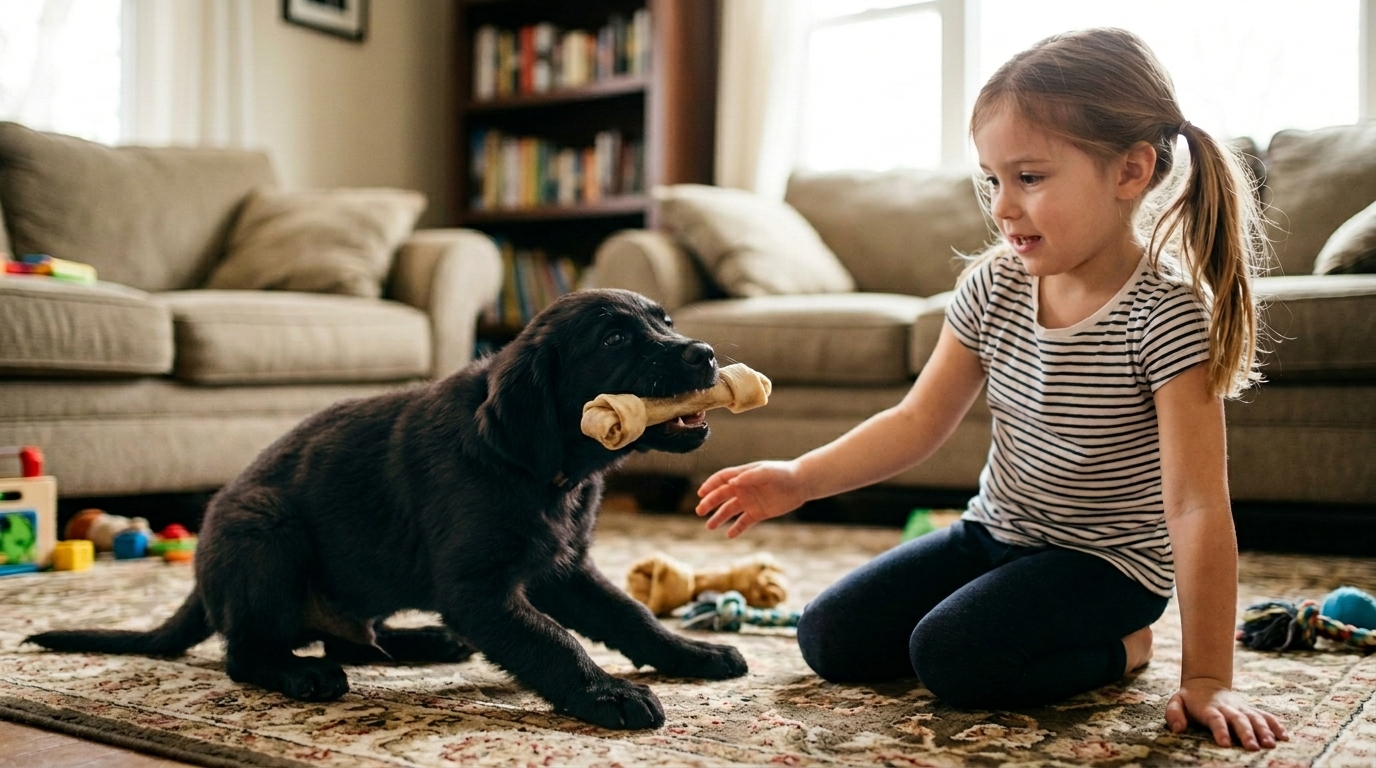
Puppies often guard toys or stolen items.
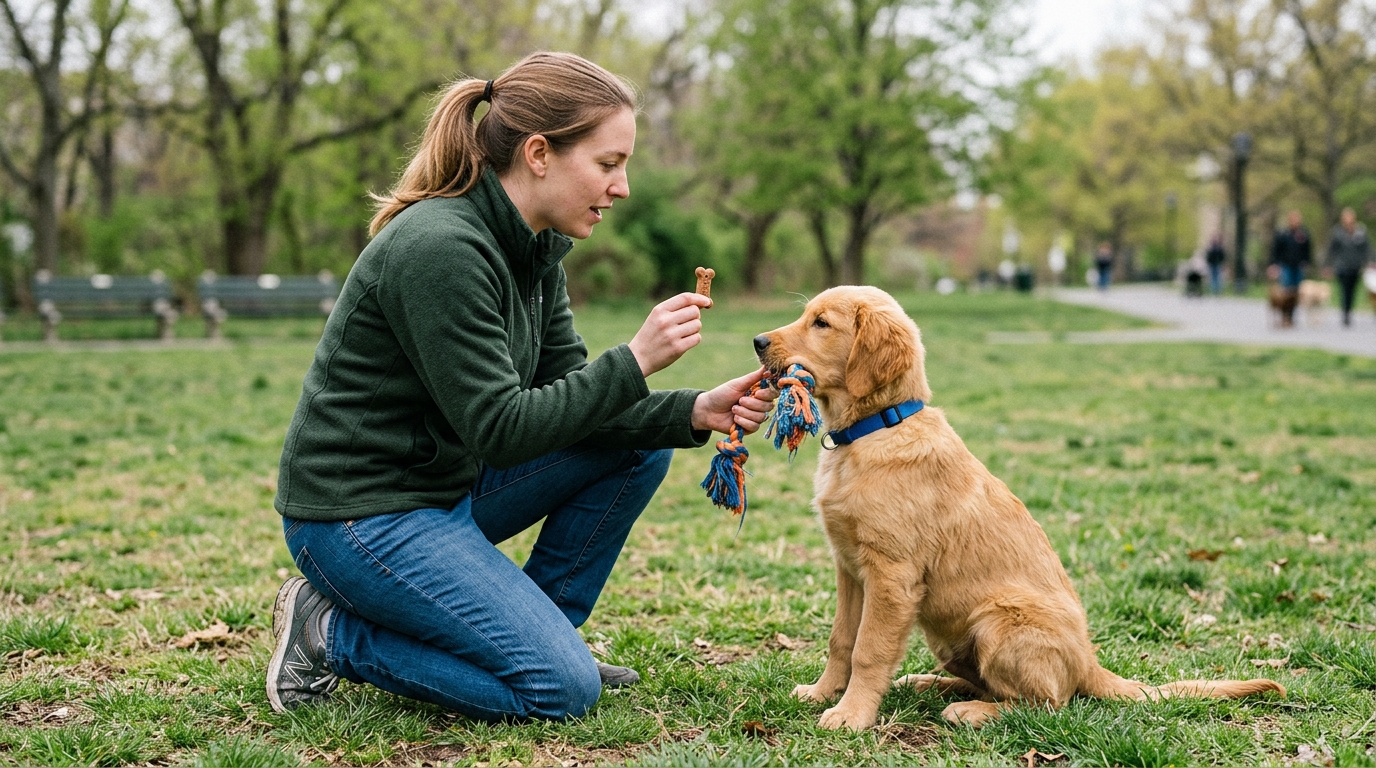
A fair exchange teaches them that giving something up leads to a reward.
Offer a treat in exchange for the item.
Use a simple cue such as “give”.
Once the puppy releases it, praise gently and give the treat.
Return the item at times so the puppy learns that letting go does not mean losing it forever.
Practise this with low-value objects before moving to items the puppy likes more.
Handling with care
Many dogs guard through discomfort with touch.
Gentle handling from an early age can ease this.
Stroke the puppy lightly during relaxed moments.
Pair touch with treats.
Focus on areas such as paws, ears, and tail.
Keep sessions short so the puppy stays at ease.
If the puppy stiffens or pulls away, pause.
Give space, then try again later.
Managing the environment
Set your puppy up for success.
Feed in a quiet area with little foot traffic.
Keep high-value items out of reach during the early stages of training.
Supervise play with children so the puppy does not feel pressured to defend toys.
Consistency matters.
Mixed signals can confuse a young dog.
When to seek help
Some puppies show strong guarding early on.
Biting, snapping, or intense reactions may need guidance from a qualified trainer or behaviour specialist.
Early support can prevent the behaviour from settling in.
Final thoughts
Resource guarding can be prevented in many cases through patience and clear training.
Watch for small signs, respond with calm actions, and build positive links with people near valued items.
A puppy that feels secure has little reason to guard.
We offer puppy classes to learn more.